 Ace Hybrid Tech | Hybrid battery replacement
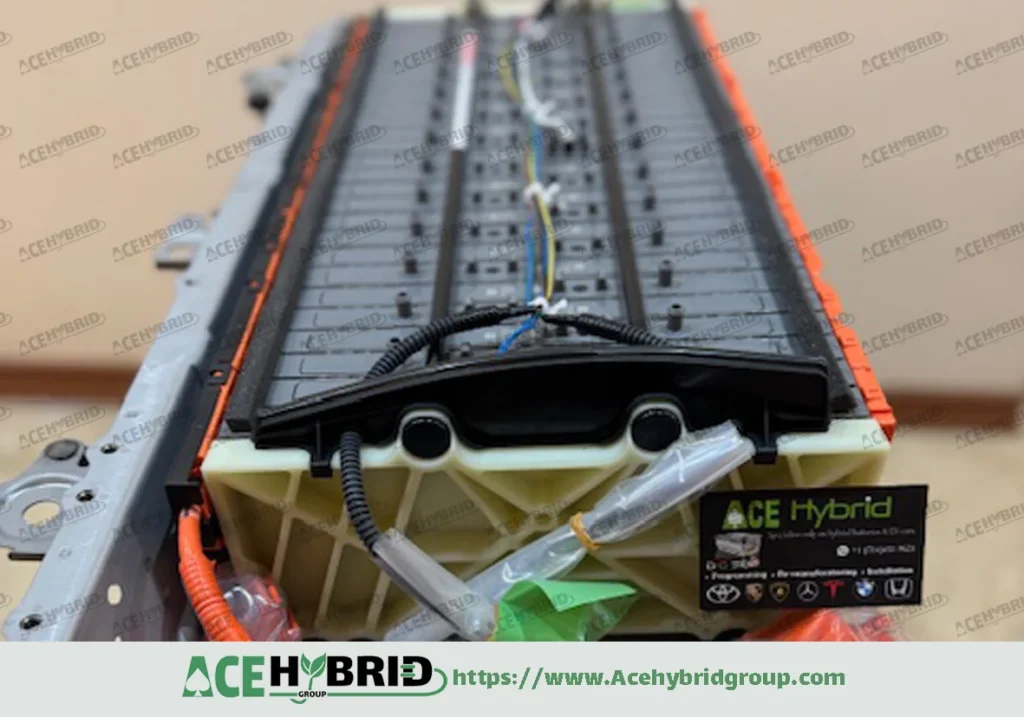
At Ace Hybrid Tech, remanufacturing a hybrid battery is treated as an engineering-driven process, not a parts replacement task. Over years of field data and failure analysis, one principle has proven consistent: the quality of remanufacturing is defined by the quality of diagnostics performed before rebuilding begins.
This article explains the key diagnostic tests used by Ace Hybrid Tech before hybrid battery remanufacturing, and why skipping any of these steps directly leads to early failure, imbalance, or repeat fault codes.
1.High-Voltage Safety & Isolation Verification
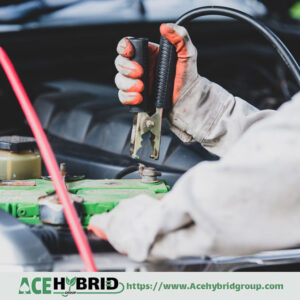
Every hybrid battery entering the Ace Hybrid Tech remanufacturing facility undergoes mandatory high-voltage isolation testing before any disassembly.
This step verifies:
- Insulation resistance between HV circuits and chassis ground
- Presence of electrolyte leakage or moisture ingress
- Integrity of internal insulation under load conditions
Batteries that fail isolation thresholds are not approved for remanufacturing until the root cause is fully identified. Safety and electrical integrity are treated as prerequisites, not assumptions.
2.Module-Level Voltage Deviation Mapping
Ace Hybrid Tech performs full-pack module voltage mapping rather than spot checks.
This process:
- Measures open-circuit voltage of every module
- Identifies deviation patterns across the pack
- Flags early-stage imbalance that may not yet trigger fault codes
Voltage deviation trends often reveal deeper degradation mechanisms that simple “pass/fail” testing cannot detect.
3.Dynamic Capacity & Load Testing
Static voltage values alone are unreliable indicators of real-world performance. For this reason, Ace Hybrid Tech uses dynamic load-based capacity testing.
Each module is evaluated for:
- True usable capacity (Ah)
- Voltage stability under controlled discharge
- Recovery behavior after load removal
Modules that fail to maintain stable output under load are excluded, even if their open-circuit voltage appears normal.
4.Internal Resistance (IR) Profiling & Matching
Internal resistance imbalance is one of the most common causes of premature remanufactured battery failure.
Ace Hybrid Tech performs:
- Individual module IR measurement
- Comparative resistance profiling
- Module grouping based on matched electrical behavior
Only modules with compatible resistance characteristics are paired together. This step is critical for long-term balance, thermal stability, and power delivery.
Let’s Talk Hybrid Solutions!
Contact Ace Hybrid Tech for professional service and support.
5.Thermal Behavior & Heat Distribution Analysis
Thermal inconsistency is a leading contributor to accelerated degradation in hybrid battery packs.
Ace Hybrid Tech diagnostics include:
- Temperature rise analysis during load testing
- Detection of uneven heat distribution
- Identification of localized thermal stress zones
These tests help uncover cooling system inefficiencies, airflow restrictions, or internally stressed cells before reassembly.
6.State of Health (SOH) Evaluation
Rather than relying on generic thresholds, Ace Hybrid Tech applies data-driven SOH estimation based on real performance metrics.
SOH analysis considers:
- Capacity retention relative to baseline
- Degradation trends across modules
- Expected lifecycle after remanufacturing
This allows precise decision-making between module replacement, reconditioning, or full pack rejection.
7.Battery Management System (BMS) Diagnostics
A remanufactured battery cannot perform reliably if the control system is compromised.
Ace Hybrid Tech validates:
- Stored and historical fault codes
- Sensor accuracy and calibration
- Communication stability between BMS and vehicle systems
BMS-related issues are resolved before pack approval, preventing false failures and post-installation customer complaints.
8.Root Cause Failure Analysis
Unlike basic refurbishment operations, Ace Hybrid Tech performs root cause analysis on failed or degraded packs.
This analysis identifies:
- Recurrent failure patterns
- Environmental and thermal stress contributors
- Charging behavior and usage anomalies
Understanding why a battery failed is essential to preventing repeat failures after remanufacturing.
Why Ace Hybrid Tech Diagnostics Matter
Many remanufactured hybrid batteries fail not because of poor components, but because critical diagnostic steps were skipped or simplified. Voltage-only testing, unmatched modules, and ignored thermal behavior result in short service life and unstable performance.
At Ace Hybrid Tech, diagnostics are an engineering discipline. Every remanufactured hybrid battery is built on verified data, validated performance, and controlled processes.
Remanufacturing starts with diagnostics — everything else depends on it.
Ace Hybrid Tech specializes in professional hybrid battery remanufacturing for all vehicle platforms, applying OEM-grade diagnostic standards, performance validation, and quality control to extend battery lifecycle reliably and sustainably.